Catherine, Princess of Wales: Five Dazzling Jewels That Define Her Royal Fashion Style
There are royal wardrobes, and then there are royal jewels. Clothes may define a season, a silhouette or a particular moment in fashion history, but jewellery possesses a different kind of power. A magnificent jewel can outlive trends, generations and even the people who first wore it. Diamonds, sapphires and pearls can pass from one royal woman to another, gathering memories and meaning as they go. In the hands or around the neck, ears and head—of a new wearer, an historic jewel can begin an entirely new chapter.
Few women in the modern royal family demonstrate this more beautifully than Catherine, Princess of Wales.
For much of her public life, Catherine has been celebrated for her elegant, disciplined approach to fashion. Her style is recognisable without being repetitive: polished coat dresses, beautifully cut evening gowns, immaculate tailoring, graceful hats and an instinctive understanding of when restraint can make the greatest impact. Jewellery plays an essential role in that carefully considered visual language. She rarely appears overloaded with diamonds or precious stones. Instead, each significant piece is allowed its moment.
A spectacular tiara is paired with a gown that allows it to command attention. Historic pearls bring softness and formality to an otherwise understated ensemble. A pair of earrings can transform a monochrome dress. And, at the centre of it all, one extraordinary jewel has become inseparable from Catherine’s image: the deep-blue sapphire and diamond engagement ring that once belonged to Diana, Princess of Wales.
That ring is more than Catherine’s most famous piece of jewellery. It is arguably one of the most famous engagement rings in the world.
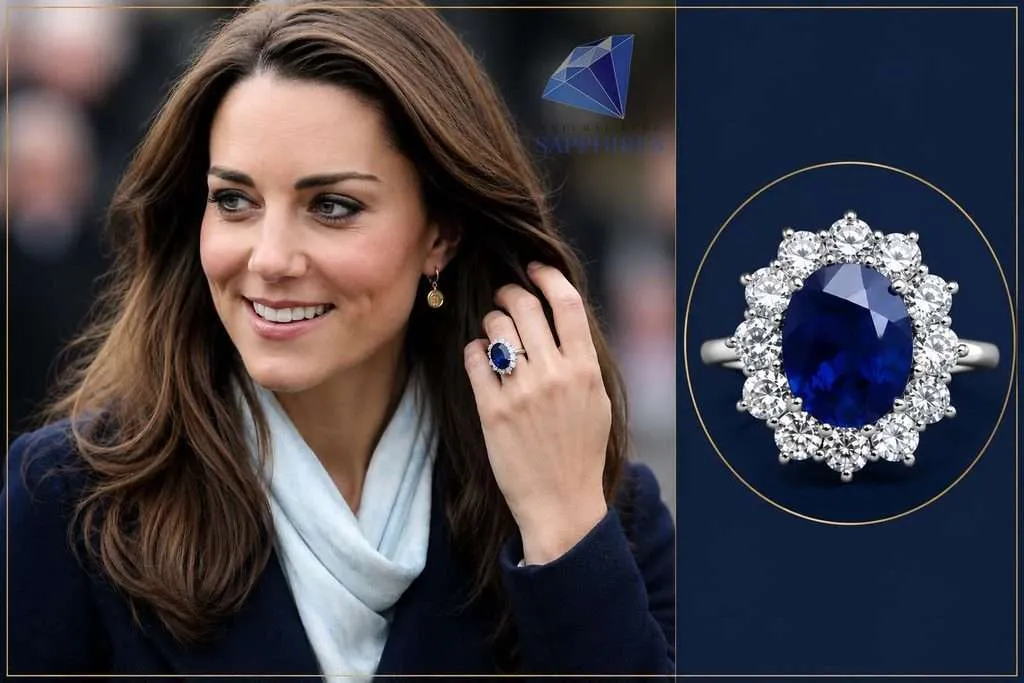
Originally chosen by Diana in 1981, the design features a 12-carat oval blue Ceylon sapphire surrounded by fourteen solitaire diamonds and set in 18-carat white gold. Prince William chose his mother’s ring when he proposed to Catherine in 2010, giving the jewel an emotional significance that no newly commissioned diamond could possibly have matched.
Yet Catherine’s royal jewellery story extends far beyond the sapphire.
Her collection—or, more accurately, the remarkable selection of jewels she has personally inherited, been given, or has been entrusted to wear offers a fascinating lesson in royal fashion. Some pieces have personal and family histories. Others are historic jewels from the royal collection. Their ownership cannot all be described in the same way, and it would be inaccurate to suggest that Catherine personally owns every magnificent jewel that appears in photographs of her.
That distinction is important because it makes the story even more compelling.
When Catherine wears certain historic royal jewels, she is not simply displaying wealth. She is participating in a tradition of preservation and continuity. The wearer changes, but the jewel remains, carrying its history forward into another generation.
From the famous sapphire ring to the magnificent Lover’s Knot tiara, these five beautiful pieces reveal how jewellery has become one of the most powerful elements of Catherine’s royal fashion identity.
1. The Blue Sapphire Engagement Ring: The Jewel at the Heart of Her Style
If one piece of jewellery could be said to define Catherine’s public image, it would unquestionably be her engagement ring.
The first thing the eye notices is the colour.
It is an extraordinary blue: rich, saturated and immediately arresting. Unlike the icy brilliance of a diamond solitaire, the sapphire has depth. It seems almost to change with the light, appearing bright and electric in some photographs and darker, more mysterious and velvety in others.
Surrounding the central sapphire is a halo of fourteen diamonds, creating one of the most recognisable cluster designs in modern jewellery history.
The result is neither minimal nor conventionally understated.
And yet it is timeless.
That is one of the great mysteries of this ring. Created in an era of extravagant royal fashion, it has never appeared dated. Diana wore it with the dramatic glamour of the 1980s and 1990s: broad shoulders, elaborate evening gowns, sweeping skirts, oversized collars and bold hats. Catherine has worn exactly the same jewel with sharply tailored coats, streamlined dresses and the more refined, controlled silhouettes associated with twenty-first-century royal style.
The ring works perfectly in both worlds.
That alone is a triumph of design.
But fashion is only one part of its appeal.
The emotional story behind the sapphire gives it a power no ordinary engagement ring could possess.
Diana selected the ring for her engagement to the then Prince Charles in 1981. The jewel became an immediate part of her public identity and accompanied her through some of the most photographed years in modern royal history. Its vivid blue stone was seen at official engagements, state occasions and countless historic moments, eventually becoming as recognisable as many of Diana’s most famous dresses.
When Prince William proposed to Catherine in 2010, he chose his mother’s engagement ring.
The decision was deeply personal. Speaking after the engagement, William explained that the ring was his way of ensuring that his mother was not absent from the occasion. The sapphire was therefore transformed from a jewel associated with Diana’s marriage into a powerful connection between the past and the future.
For Catherine, wearing it meant accepting an extraordinary piece of emotional history.
It is impossible to see the ring without thinking of Diana. Yet, over the years, Catherine has also made it part of her own image. Millions of photographs now show the sapphire against Catherine’s hand as she greets crowds, attends state occasions, waves from balconies and stands beside Prince William.
The jewel has two royal lives. Its first was Diana’s. Its second is Catherine’s. And therein lies its extraordinary fashion significance.
The ring has never needed to compete with Catherine’s wardrobe because it is already the ultimate statement accessory. It can bring drama to the simplest coat dress or add an intense flash of colour to a neutral ensemble. It can be worn with evening diamonds without disappearing into the brilliance, because the sapphire’s colour gives it an identity all of its own.
Catherine understands this instinctively.
She rarely tries to overpower the ring. Instead, it is allowed to remain the centrepiece of her everyday jewellery. The simplicity of that approach makes it more effective. A woman wearing one of the most famous jewels in the world does not need to prove that she is wearing it. The ring speaks for itself. It also demonstrates a quality that has become central to Catherine’s fashion image: continuity without imitation. She does not dress as Diana dressed. She does not attempt to recreate Diana’s jewellery styling. Instead, she wears a jewel associated with Diana while incorporating it naturally into her own aesthetic. That distinction allows the sapphire to remain a tribute without turning Catherine into an imitation of the woman who wore it first.
In many ways, the blue sapphire is the perfect royal fashion jewel because it represents everything that great style requires.
- Beauty
- Individuality
- History
- Sentiment
- Permanence
Decades after Diana first placed it on her finger, the sapphire remains one of the most instantly recognisable jewels on earth. Its colour still captures the eye. Its story still captures the imagination.
And on Catherine’s hand, it continues to write royal fashion history.
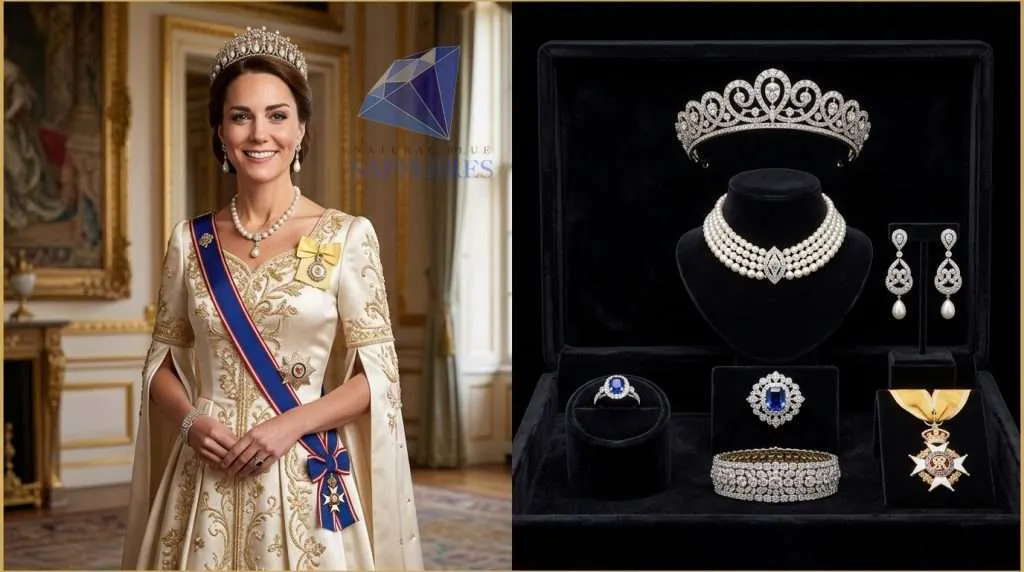
2. Queen Mary’s Lover’s Knot Tiara: The Ultimate Royal Fashion Statement
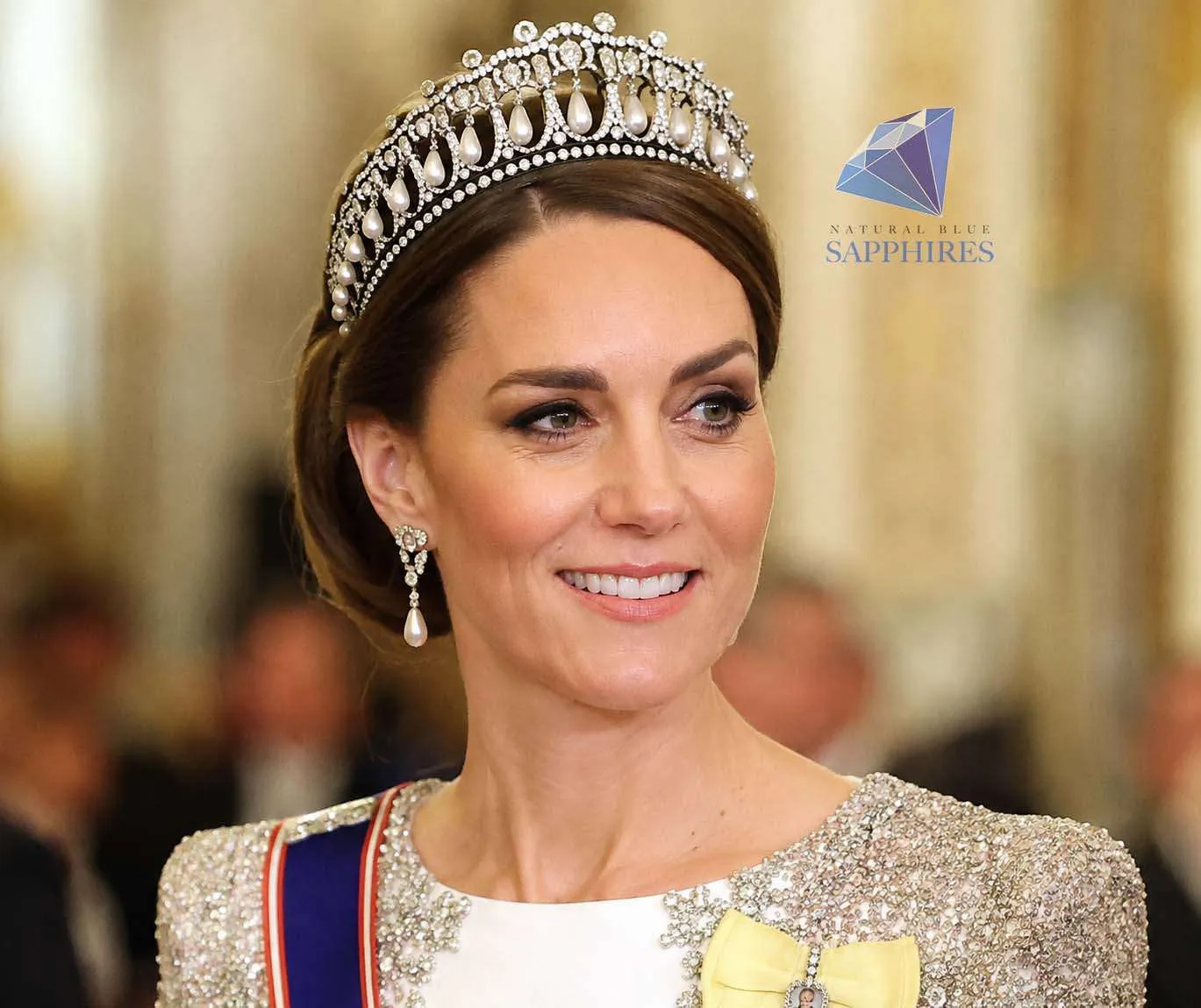
If the sapphire ring is Catherine’s most famous everyday jewel, Queen Mary’s Lover’s Knot tiara is unquestionably her most dramatic. There is something almost theatrical about a tiara. Unlike a necklace or pair of earrings, it transforms the entire silhouette of the wearer. It changes the line of the head and the posture of the body. Under the lights of a state banquet, diamonds can create their own atmosphere, surrounding the face with brilliance and making the wearer appear almost like a figure from another age.
The Lover’s Knot tiara does this with particular magnificence. Originally commissioned from Garrard for Queen Mary, the tiara is famous for its diamond arches and its hanging pearls. It was inspired by an earlier Cambridge Lover’s Knot tiara, although the two pieces are distinct jewels. The design worn by Catherine became one of Diana’s most celebrated tiaras after Queen Elizabeth II loaned it to her following her marriage.
The tiara’s design is extraordinary because it combines two very different forms of jewellery beauty.
- There is the brilliance of diamonds
- And then there is the soft luminosity of pearls.
- Diamonds glitter sharply. Pearls glow.
- Together they create a look that is simultaneously regal and romantic.
For Catherine, the tiara has become one of the strongest visual symbols of her role as a senior royal woman. When she wears it at a state banquet or formal diplomatic occasion, the transformation is immediate. The Princess known for beautifully tailored coats and elegant daywear suddenly appears in the full splendour of royal evening fashion.
But the Lover’s Knot is not simply a fashion accessory. Its history is part of its beauty. It was worn by Diana. It had previously belonged to Queen Elizabeth II. Its earlier history reaches back to Queen Mary. Catherine therefore wears a piece with generations of royal associations behind it.This is where the idea of stewardship becomes especially meaningful.
The tiara is not simply another item in an ordinary jewellery box. It is a historic royal jewel with a life extending beyond any individual wearer. Catherine’s appearances in it form part of the continuing public history of the piece. She is, in effect, adding her own chapter to a story already written by earlier royal women. Fashion photographs capture this beautifully.
The same tiara that framed Diana’s face above spectacular 1980s evening gowns now appears with Catherine’s more contemporary formal wardrobe. It has been worn with rich velvet, glittering evening dresses, elegant capes and sleek formal silhouettes.
- The clothes change.
- The tiara remains.
- That is the power of great jewellery.
3. The Four-Row Japanese Pearl Choker: Understated Royal Glamour
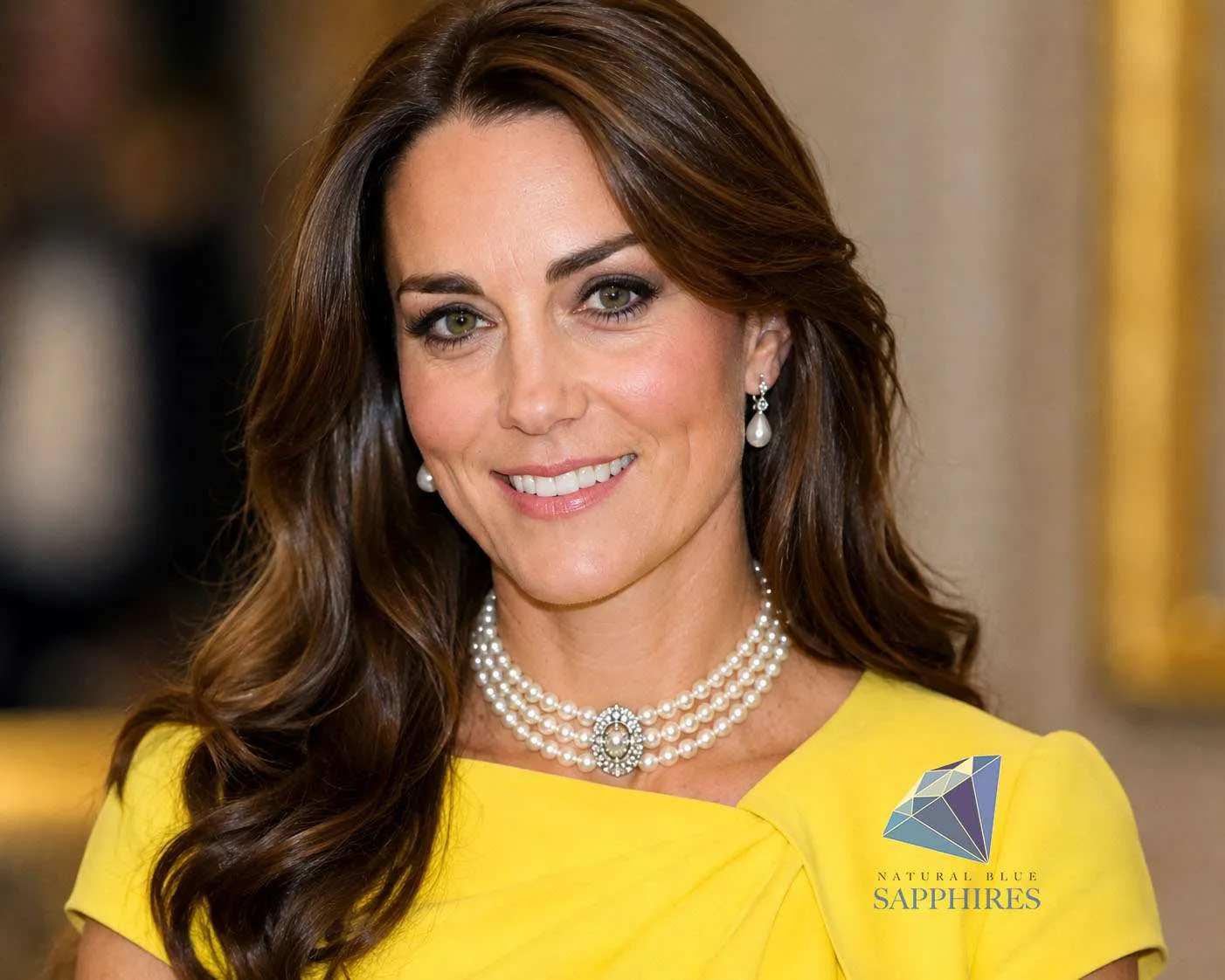
Not all important royal jewels announce themselves with enormous gemstones. Sometimes the most elegant piece is the one that appears almost restrained. Catherine’s four-row Japanese pearl choker is a perfect example.
The necklace consists of four rows of pearls brought together by a prominent diamond clasp. It was created from pearls gifted to Queen Elizabeth II by the Japanese government and forms part of the royal jewellery collection. The necklace was later worn by Diana and has also been worn by Catherine on important occasions.
Pearls have always occupied a special place in royal fashion. They possess a dignity that diamonds do not always have. Diamonds can be dazzling and spectacular, but pearls are softer. They flatter the skin, reflect light gently and bring a sense of formality without appearing aggressively luxurious.
Catherine wears pearls particularly well because they complement her fashion aesthetic. Her style is generally based on proportion and polish rather than excess. A pearl necklace can add historical grandeur to an outfit without disturbing the overall balance. The four rows create a stronger presence than a simple strand, but the white pearls prevent the necklace from becoming overpowering.
The result is regal rather than flamboyant. The necklace has also appeared at deeply significant moments. Catherine wore it at Prince Philip’s funeral, pairing it with the Bahrain pearl and diamond earrings. The choice was particularly appropriate because pearls have long been associated with mourning and solemnity in royal dress, while the necklace itself carried connections to earlier generations of the family.
This is where royal jewellery can communicate without words. A jewel may be beautiful, but its selection for a particular occasion can also carry meaning.
The four-row pearl choker therefore represents one of the most sophisticated aspects of Catherine’s fashion sense: her ability to choose jewellery that is visually beautiful while remaining appropriate to the emotional character of an event. It is glamour with discipline. And perhaps that is why the necklace is so effective.
4. The Bahrain Pearl and Diamond Earrings: Small Jewels, Enormous Elegance
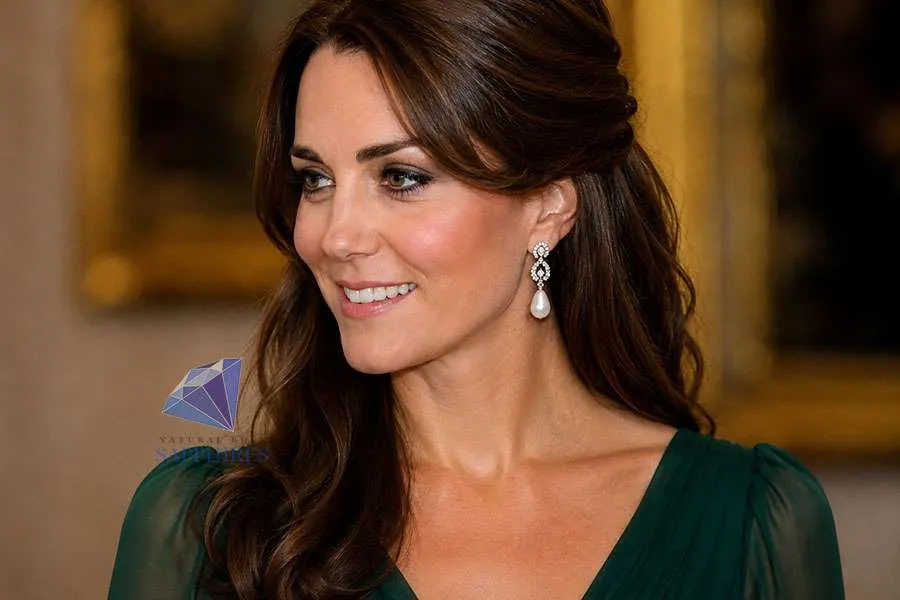
The most remarkable jewellery is not always the largest. Catherine’s Bahrain pearl and diamond earrings prove that a relatively delicate pair of earrings can carry both beauty and history.
Each earring combines diamonds with a pearl suspended beneath, creating a design that is formal, refined and exceptionally versatile. The pearls came from a group given to Queen Elizabeth II and Prince Philip as a wedding gift by the ruler of Bahrain in 1947, and Catherine has worn the earrings at a number of important royal occasions.
The design is quintessentially royal. There is enough diamond brilliance to make the earrings sparkle under bright lights, but the pearl drop softens the effect. The shape lengthens the line of the neck and creates movement when the wearer turns her head. From a fashion perspective, they are exceptionally useful.
- They can be worn with black.
- They can be worn with white.
- They complement deep jewel tones and pastel shades.
They are appropriate for day-to-evening occasions while retaining enough grandeur for major ceremonies.
Catherine’s repeated use of pearls reveals much about her jewellery style. She understands that pearls create an instant sense of heritage. They connect modern fashion to an older world of royal portraiture, state occasions and formal dressing. Yet she does not wear them in a way that feels costume-like. Instead, she incorporates them into contemporary outfits, allowing historic jewels to feel relevant.
The Bahrain earrings are particularly effective because they frame the face without distracting from the clothes. They add a final note of luxury to an ensemble rather than overwhelming it. In a fashion age that often equates statement jewellery with sheer size, there is something refreshing about their elegance. They prove that impact can come from refinement.
5. Diana’s Diamond and South Sea Pearl Earrings: A Jewel Given a New Life
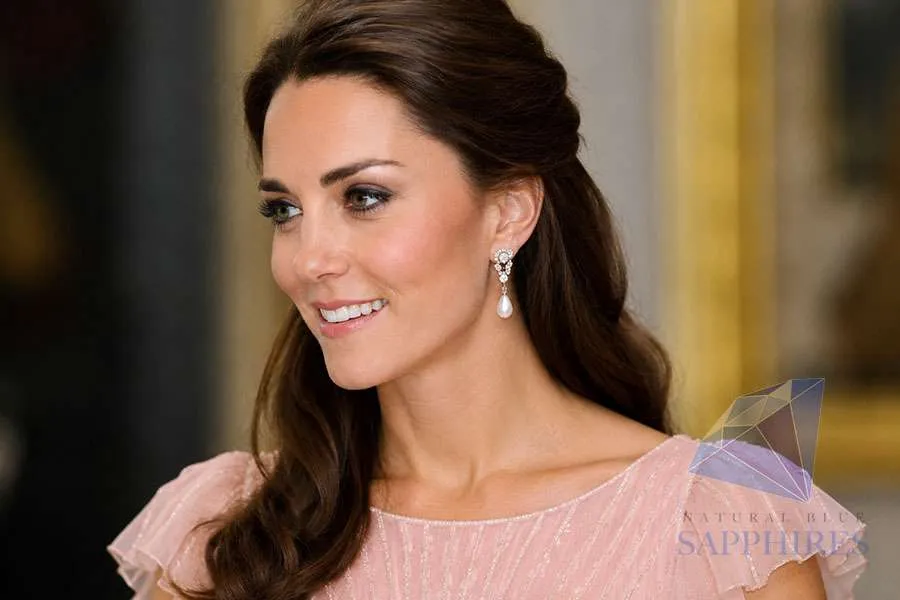
The fifth jewel reveals another important part of Catherine’s royal fashion story: her ability to bring pieces associated with Diana into a new era.
The diamond and South Sea pearl earrings are among the most beautiful jewels Catherine has worn. The original design, worn by Diana, featured an elaborate arrangement of diamonds leading to large South Sea pearls. Diana wore them on several occasions, and Catherine later appeared wearing a version with smaller pearls attached, demonstrating how a historic jewel can be adapted for another wearer and another generation.
Their beauty lies in their delicacy.
The diamonds create intricate movement and brilliance, while the pearls provide a luxurious focal point. Unlike the dramatic sapphire ring, these earrings do not rely on colour. Their impact comes from texture, light and proportion.
They are ideal for evening wear.
Against a dark gown, the diamonds sparkle dramatically. With a pale dress, the pearls create a harmonious, almost luminous effect. Their design has enough complexity to appear special in close-up photographs while remaining elegant from a distance.
For Catherine, they also represent a personal connection to the past.
This is perhaps the most interesting feature of her jewellery wardrobe as a whole.
She does not simply borrow the visual vocabulary of previous royal women. She wears actual historic pieces associated with them.
- A pair of earrings can therefore carry a memory.
- A necklace can recall another state banquet.
- A tiara can bring to mind portraits taken decades earlier.
The sapphire ring can connect a husband to his mother and a wife to a woman she never had the opportunity to meet. In this sense, royal jewellery is unlike ordinary fashion
- Its beauty accumulates.
- Every wearer adds something.
The Fashion Power of Five Extraordinary Jewels
Taken together, these five pieces reveal the remarkable way Catherine uses jewellery to shape her royal image.
The blue sapphire engagement ring is personal, emotional and instantly recognisable. It is the heart of her jewellery story and her strongest link to Diana.
The Lover’s Knot tiara represents full royal magnificence: diamonds, pearls, history and ceremonial grandeur.
The four-row Japanese pearl choker demonstrates how historic jewellery can communicate dignity and quiet sophistication.
The Bahrain pearl and diamond earrings prove that refinement can be as powerful as spectacle.
And Diana’s diamond and South Sea pearl earrings show how a historic jewel can enter a new generation without losing its original emotional significance.
What unites all five is meaning. Catherine could wear spectacular new jewellery created by the world’s most famous houses, and on rare occasions she does wear contemporary pieces. But the jewels that make the greatest impression are often those with stories already attached to them.
- That is because royal fashion is not merely about looking beautiful.
- It is about symbolism.
When Catherine wears a historic jewel, she is participating in a visual tradition understood by millions of people. The choice of a tiara for a state banquet, pearls for a solemn ceremony or an inherited sapphire for every public appearance can communicate continuity as powerfully as any speech.
- The jewel becomes part of the occasion.
- Catherine’s fashion strength lies in knowing when to let that history speak.
The Sapphire Will Always Be the Star
Yet among all these magnificent jewels, the blue sapphire remains supreme. Nothing else Catherine wears has quite the same combination of beauty, fashion significance and emotional power.
- The stone itself is breathtaking.
- Its intense blue makes it unmistakable.
- The diamonds surrounding it ensure brilliance from every angle.
- Its proportions make it dramatic without becoming cumbersome.
- Its history gives it an importance that no auction estimate could fully express.
- For Diana, it represented the beginning of her royal life.
- For William, it represented his mother’s presence at the moment he became engaged.
For Catherine, it became the most significant jewel she would ever wear. And for the public, it has become one of the enduring images of the modern monarchy. That is the extraordinary achievement of a truly iconic piece of jewellery. It becomes more than an object. It becomes a symbol.
Catherine, Princess of Wales, has worn countless beautiful jewels, from magnificent diamonds to historic pearls and spectacular royal tiaras. Some are personal or inherited pieces; others are jewels from the royal collection entrusted to her for important occasions. Their histories and ownership are not identical, and that complexity is part of what makes the royal jewellery world so fascinating.
But Catherine’s role is larger than that of a woman simply accumulating beautiful things. When she wears these historic pieces, she becomes part of their story. She preserves their visibility.
She carries their history into the present.And she ensures that jewels associated with earlier generations remain alive rather than becoming silent objects hidden away from public view.
No jewel demonstrates that more beautifully than the famous sapphire engagement ring.
- Once worn by Diana.
- Chosen by William.
- Worn by Catherine.
A deep-blue jewel connecting memory, fashion and royal history across generations.
It is not simply the most famous piece in Catherine’s jewellery collection. It is the jewel that defines the entire story.
Related posts
- The Natural Wonder of Star Sapphires
- The Dazzling Jewellery Collection of The Princess of Wales
- Reimagine these 10 famous jewellery pieces with our natural blue sapphires
- Elizabeth Taylor’s Impressive Jewelry Collection
- Corundum’s Chameleons— Color-change Sapphires
- The Word’s Five Most Famous Blue Sapphires
- Most famous Ceylon blue Sapphire ring
- The Natural Rough Yellow Sapphire
- Kate Middleton’s Stunning Jewellery Collection
- Yogo Sapphires : The ‘Blue Pebbles’ of Montana